
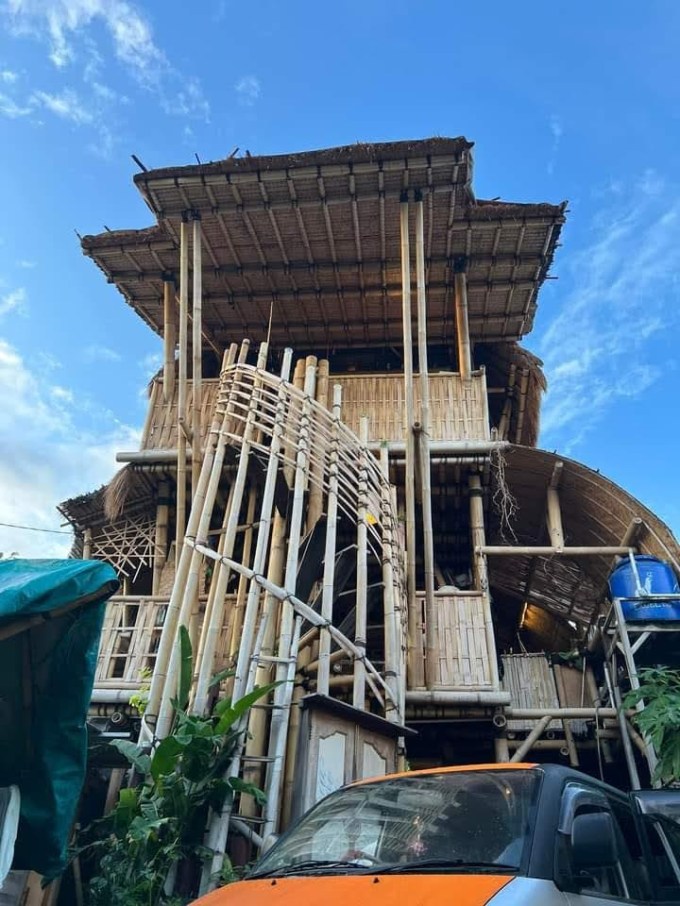
Our manifesto is to BUILD collaboratively with Regenerative projects in a way which enables more people to transition to living and learning in nature – in a community environment and re-learning cooperative living; to bring about a groundswell of activities to Actively build the Regenerative Infrastructure for the future of our farms, foods, and livelihoods.
I am Natalie Davenport and I’ve been living in Bali for 7 years and I built a bamboo house in Denpasar in 2017-18 for my daughter Freyr (21 years old) who has intellectual disability. We were struggling with the life of living in Australia where there is not much social support for people with disabilities and their families, especially single parents like myself. We spent 9 months living in the Philippines prior to moving to Bali – living with several local families which was great for Freyr – there were lots of kids around and Freyr enjoyed dancing and singing and being included with their activities. I started learning about bamboo while I had support from the mums who I paid to help me look after Freyr. I helped the families we stayed with to make some livelihood projects like a fish pond for aquaculture and a small office/room for the family to rent out or use as an office. We also stayed in the jungle with a family who I helped build a small kubu (hut) for renting out as accommodation to visitors. Unfortunately termites started eating it up straight away, which led me to research affordable methods of building and preserving bamboo. I found out about the Green School in Bali and decided to visit to deepen my knowledge. This started me on my journey toward best practice in working with bamboo.
Treatment to prevent deterioration/destruction from insect attack remains the main hinderance to its use/uptake in developing countries, as it essentially treatment doubles the cost… Even though people in ‘developing’/post-colonised countries may have access to bamboo or family land on which they can grow bamboo… it is still seen as just a “temporary” building material although some appropriate planning could make bamboo affordable. This would put it on many more peoples’ radar and lift it to a status of settlement rather than temporary housing.
We suggest that this could be achieved through treating it traditionally, which involves “soaking” it for up to a year (depending on the type of bamboo) which ferments the sugars out of the bamboo and makes it less attractive to its primary destroyer – the powder post beetle (which eats the bamboo from the inside of the culm – literally turning posts into powder). The material price can be reduced considerably by using the traditional method (still used in Vietnam and India but currently not seen as “efficient” time-wise and doesn’t provide termite protection) and we are interested to study the actual value which could be derived from utilizing land to treat bamboos on the current market value.
As it will probably be quite some time before laminated and factory-processed bamboo materials become affordable in developing countries to people on “local wage” rates, my interest in working with bamboo is in its affordable less-mechanised processing forms. And treated bamboo often costs double or more than he common value of bamboo.
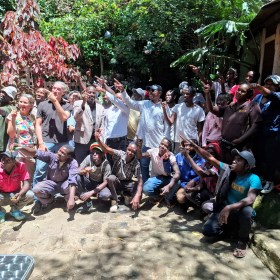
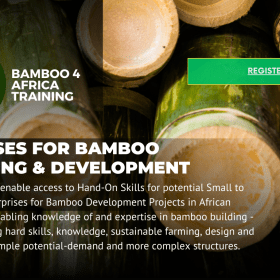
Further, increasingly bamboo is being grown or is already present as a resource in developing countries, such as Uganda and Kenya… but skills are lacking for local people to utilise it in building their homes/houses.
We aim to influence development patterns and material use/building trends in countries where bamboo is a somewhat abundant resource – where the current trend towards brick and tile homes (with air-con and fridges) is ever-increasing…. and develop building styles with bamboo that are “attractive” and can be applied to a “modern” context of living – by everyday people who aspire to “normal” societal standards – as we all DO like to live in a nice house right? It’s naturally “human” to seek social status and to have some pride for where one lives.
Our priorities are:
- Price/Affordability
- Style/Practicality
- Skills/Methods
We are developing capacity to do some trials for the traditional age-old treatment process of soaking/fermenting bamboo (a widely used preservation method used before modern materials and time-constraints “took over”). We would like to make an economic evaluation on using this method accounted into the life/growing cycle of bamboo….. As, in reality, one extra year (for the treatment process) factored in – could save on the costs of treatment (borax and boric acid products – also a finite resource) which are often more expensive than the raw material cost of the bamboo to make a building.
So what about affordable bamboo design and building that COULD suit more people – which would make it “Last Longer”, making it more attractive, and could also reduce power/energy consumption in average homes when combined with Earth-building…
Could the shortfalls of bamboo be overcome for the majority >70% of the Earth’s population who live on around US$10/day?
Could bamboo living be made more practical ? Mainly in relation to it having practically zero insulative properties for sound – which makes it very unattractive for closely-spaced settlement.
We all know that Bali bamboo builders are some of the best-skilled in the world and having recently finished our first online training with a Malaysian construction company who have had their first taste of bamboo-building Bali-style, we are excited to see how many builders we can affect and bring bamboo-building to a practical awareness that can benefit more people and be a style/concept that (bar strict building codes which currently make building innovation extremely difficult) that could be applied in western countries – which a group of 6 or 8 people could build.
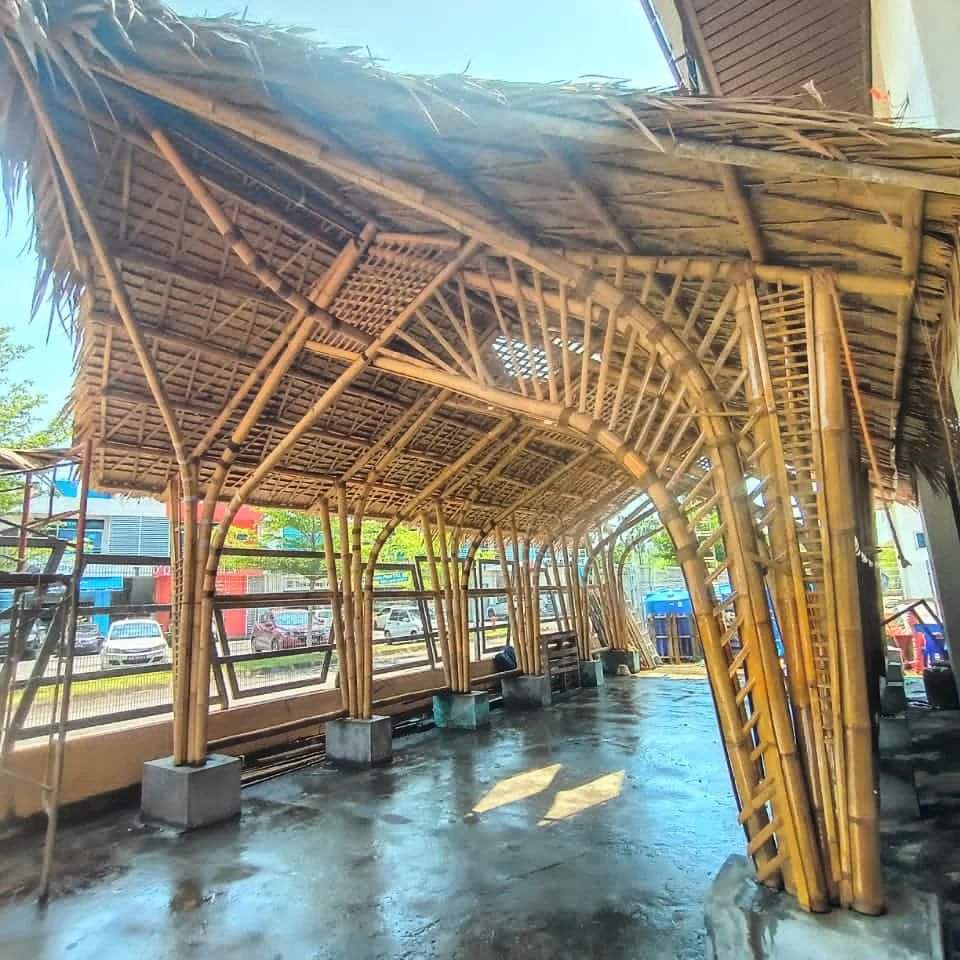
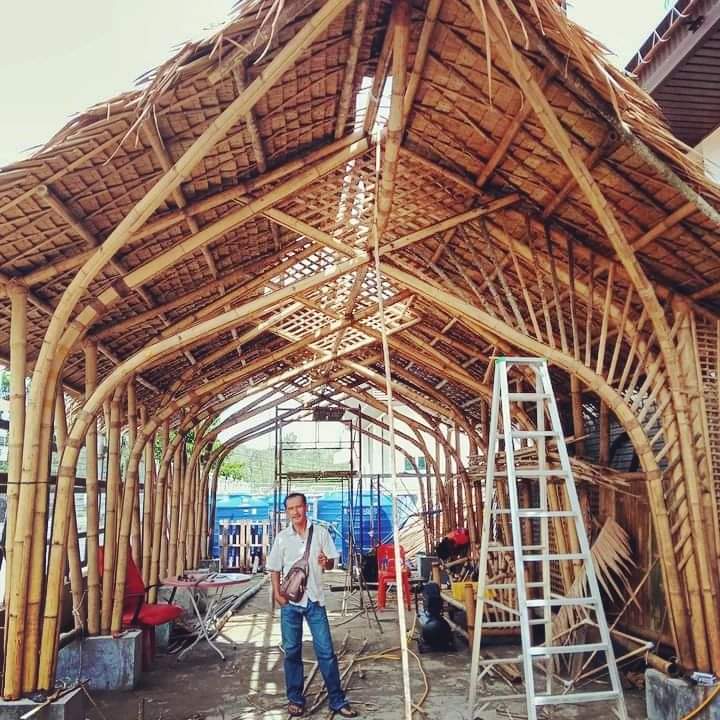
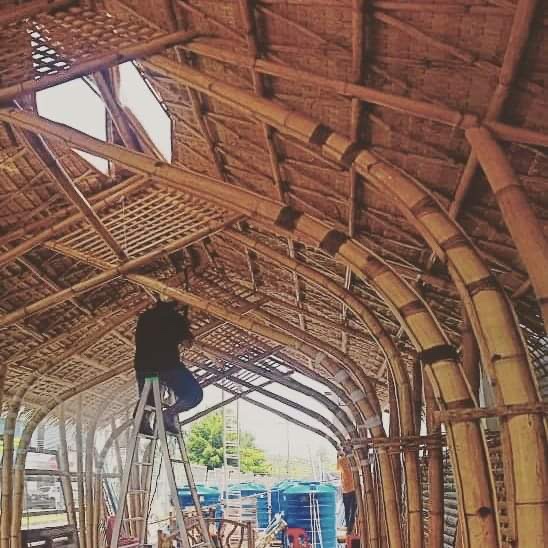
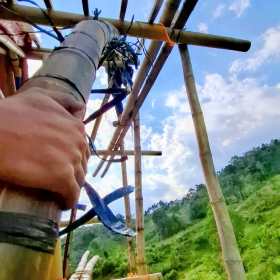
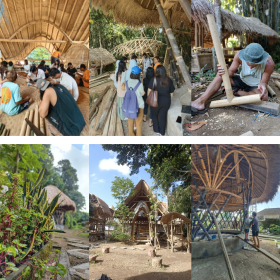
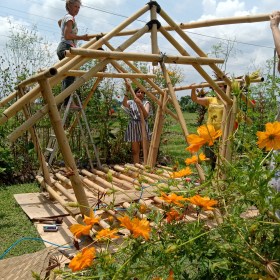
That is the focus of our Internship programs for learning traditional bamboo skills for building aspects of home-living and design. We are working with Earth/Cob to improve sound and temperature insulation qualities of living in a bamboo structure and also recycled materials such as tetra-pack and used billboard fabric to create affordable “worker”/back-packer/hostel-type accommodation, along with more “settlement” type accommodation which demonstrates affordable and aesthetic bamboo design intended to be the Centre of community-building activities. Our manifesto is to start building the places where people may come and collaborate with the Regeneration process of our societies… Where we can pursue peace with the planet and each other.
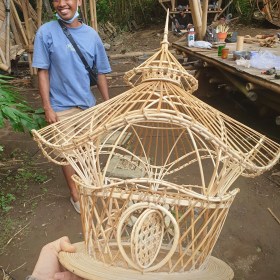
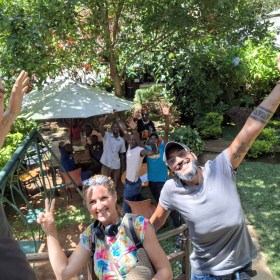
Follow our community builds in Bali’s village of world-famous bamboo builders – where we aim to make bamboo-building programs accessible to everyday people, retain traditional skills and knowledge of Bali’s artisans, and uplift rural folk and collaboratively create meaningful enrichment by spending time in community.
I am super excited to be collaborating with Josh Geiger, an Earth Builder from the US, to see how cob, lime straw and clay straw panels can work with bamboo and create more insulative properties for a bamboo building, and to find other ways to combine the aesthetics of both materials to make practical, affordable and beautiful simplistic family-friendly homes.
Join the/our Facebook group to follow our progress on our current bamboo build in Belega. The group is free; www.facebook.com/groups/5443799475664816/?ref=share
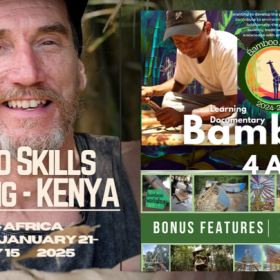
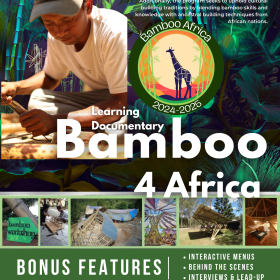
There is a Paid Online program where I will be publishing video of curated content from our activities… and 50% of the course fee is being directly donated to our Sister Communities in Kenya and Uganda. We are working with some specific projects which you can donate course fees to directly and send through your transaction receipt to receive that value deducted from your Paid Program anytime in the future. In fact, For every US$100 you donate, I will give you $USD$150 credit towards our programs now and in the future (keeping in mind I need 3 people in that attendance slot to run a viable program).
I am committed to providing water for this upcoming predicted drought for people in Kenya and Uganda and in the next 24 months plan to bring a team to Uganda to teach a course locally in conjunction with TANU Transformation Advocacy Network Uganda where we will host a knowledge-sharing program and practical build for sustainable comfortable housing – the design for which we are working on through the online program.
Come and learn from the best and become an unbeatable bamboo builder!! Our programs run 6 days a week (Monday to Saturday) and can be adapted to a part-time schedule of 3 days/week over a double time-period.
Internship Course Costs:
One Week Program: USD$335 / Rp.5,100,000 (includes one on one basic training and mentorship for Bamboo Construction)
Two-week Program: USD$650 / Rp.9,800,000 (includes one-on-one basic training and construction mentorship)
Three-week Program: USD$999 / Rp.14,500,000 (includes training and mentorship in bamboo construction, on-site build and construction experience program)
One-month Program: USD$1200 / Rp.17,500,000 (includes 3 week training in bamboo and construction and one week group build project -mentorship for individual construction project)
VIP Program 1 week: USD$415 / Rp.6,000,000
VIP Program 2 week: USD$750 / Rp.11,000,000
1 week Group Build: USD$210 / Rp.3,200,000
2 week Group Build: USD$330 / Rp.5,000,000
Accommodation/Meals:
Nightly rate: USD$10 / Rp.150,000 (basic room and breakfast at local homestay)
Monthly rate: USD$195 / Rp.2,500,000 (basic room and breakfast)
Fill out our enquiry form and let us know what you want to learn about with bamboo. (See Internship page)
Packages:
3 week Internship + 2 week VIP $1720
3 week Internship + 2 week Group Build USD$1600
6 week Internship (3+3) Beginner and Intermediate/Advanced programs $1930 / Rp.28,300,000
6 week Internship + 2 week group build USD$2600 / Rp37,000,000
6 week Internship + 1 week VIP USD$2345 /
6 week Internship + 2 week VIP USD$2670
9 week Internship (3 + 3 + 3) USD$2910
9 week Internship + 3 week Group Build $3200
9 weeks Internship + 2 weeks VIP $3635
9 weeks Internship + 3 weeks Group Build + 2 weeks VIP $4100
[insert send info button and link to Internships page]
Discover more from Bamboo Creative Bali
Subscribe to get the latest posts sent to your email.
 Bamboo Creative Bali