
No piece of bamboo is the same… it’s extremely hard to standardise. This could be it’s weakness, or, this could be it’s strength and means as a way forward into diversifying economies and creating small businesses, strengthening communities and empowering people… In the “West” we’re taught to standardise, industrialise, scale up, and make profit. “Eastern” cultures are about helping eachother and sharing/diversifying/giving.
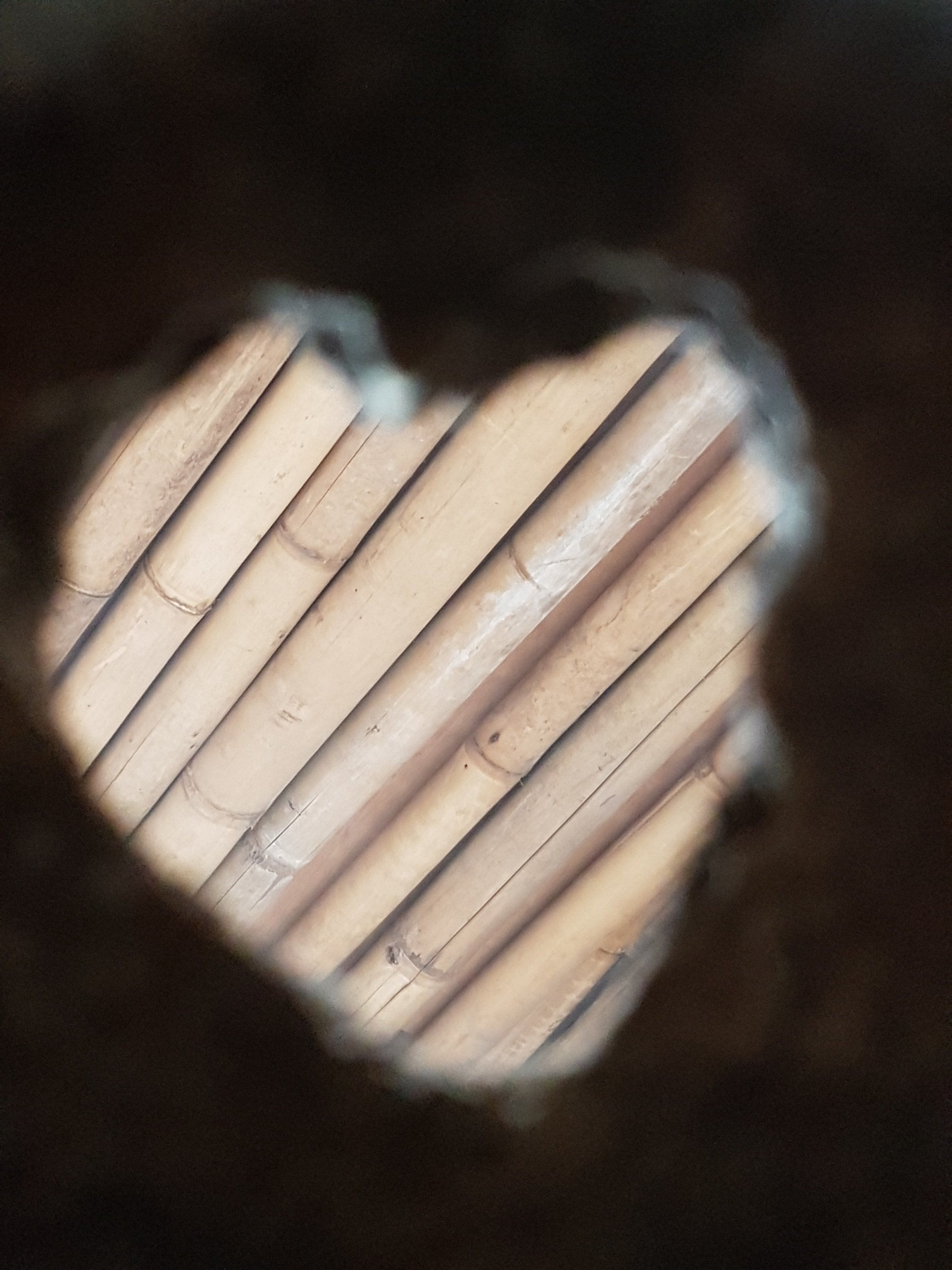
Bamboo’s “weakness” from a “Western” perspetive is that it can’t be industrialised in the sense that, every culm must be treated individually. It can not be treated like a cash crop and “strip” harvested, unless the resource is only to be used for pulp as bamboo will grow back straggely and somewhat stunted if managed in such a manner. We have seen enough of this approach to business and life the world over – and though it appears attractive to some, it rarely benefits the many.
The beauty/strength/appeal of bamboo in the more feminine/“eastern” sense, is that it requires the human touch to see it’s each and every potential maximised – and according to at each age – of being a ‘teenager’ (taking off it’s clothes/sheath) or a mature bamboo… Like the mythology that humans evolved from/with bamboo… It’s uses are limited only by the imagination of the craftsman/woman who holds it. If managed properly, ensuring that the “mother culm” is not harmed/harvested, bamboo will live for many many years providing a sustainable abundant resource for it’s family of humans. Like a mother, she will never ask to be paid for providing milk or for raising her young. We give her respect and tribute and nourishment… and look after her into her old age. I don’t know where this sentence is going but before I diverge on another thought stream…
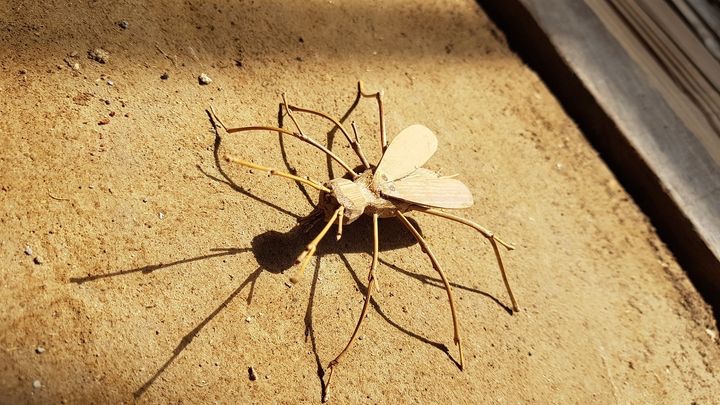
Considering that from an ordinary harvest (selective harvesting going clump to clump) of bamboo, only around 10% of what is harvested will be “straight”/ “pillar- suitable bamboo, and the rest… well, is up to the individual who needs to create something from that, we can see that within a given harvestable area, many sub-industries have the potential to exist. Also, taking into account that from an average harvest, around 5-20% of the bamboos will naturally be flawed/crack, there is an abundant resource from which to create byproducts of bamboo. And we can truly say, when it comes to bamboo, that one man’s trash is another man’s treasure: In terms of offcuts, processing and “waste”… down to the smallest piece of skin/bone of the bamboo – SOMETHING can be created from that.
Currently, people are still somewhat “controlled” and dependent on the western/centralised financial system. But when more localised trading systems become available – where the work/man/woman-power of each individual is recognised, respected and treated fairly and acknowledged (and not taken for granted/assumed/undervalued) then fair trading systems can reflect the individual input and value of each individual hand which made something = and be a means to “reciprocate” energy, power and goodwill (towards) – rather than just “take” as the current economic system allows/enables.
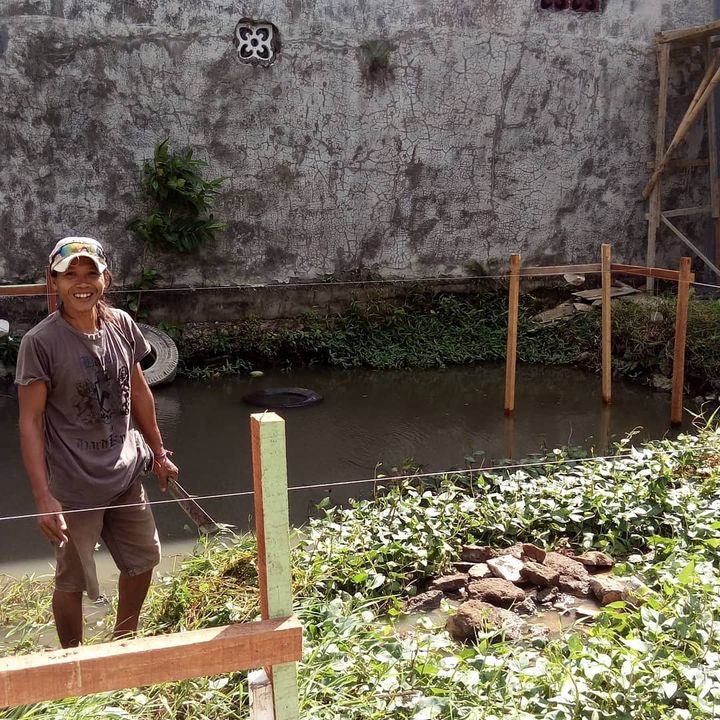
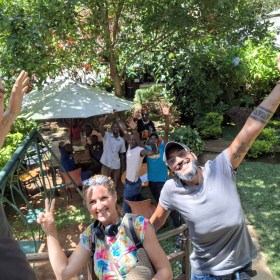
Bamboo is REALLY about sharing. And I acknowledge my teachers from Java, Supri Yanto and Arief Budi Basuki… who gave me such an insight into Indonesian culture, bamboo’s great diversity and my own imagination… From where my journey started with bamboo in Indoneisa. I could hear Supri’s words to me and our conversations as I was writing the above… And I still hear “With Heart; With Heart Natalie!… “ he would say when he saw me trying too hard /forcing something… or being in my head. (Verily, my bamboo master Supri). And truly, working with bamboo brings us into a renewed sense of being In ourselves and encourages our own natural dopamine production in a way that can be experienced by anyone – young/old. And giving / partaking in workshops over the last years has been so valuable for me as a human being… in seeing ways that my daughter also can participate/interact – which she loves doing (in a community environment… not when we are alone just me and her/ her and me – whatever) has been healing and enriching to say the least.

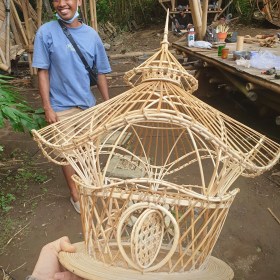
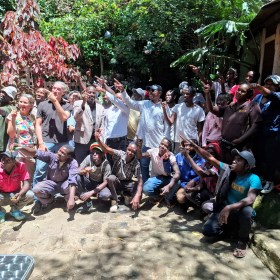
Everyone has a unique talent… a unique skill they can develop. An interest; a fascination perhaps… which could maybe be reflected in bamboo somehow. Though our workshops are fairly standardised these days (unless things go sideways as they do quite often still) there is still space for creativity and imagination – and the odd tanjent – as long as all agree. Building can be a commuity affair again and bring us together – which I fully believe. And within that realm, there are so many diversities: The household living items – lamps/lampshades, frames, trays, trims, carving, kitchen utensils; buckets (sometimes plastic can not be beaten), furniture, (don’t say clothes/bedding – better use hemp than bamboo if you care to do any research)… means for/by which we can help our collective human identity emerge from the struggle of the past many years of Colonisation and devaluing of human worth and uniqueness (there’s that word again)… and our dependence on UNNECESSARY plastic /and our throw-away mentaity. God’s Creation. You can’t put a value on that. The price of breatheing? We won’t know until there is no air. Good luck on Mars Elon.
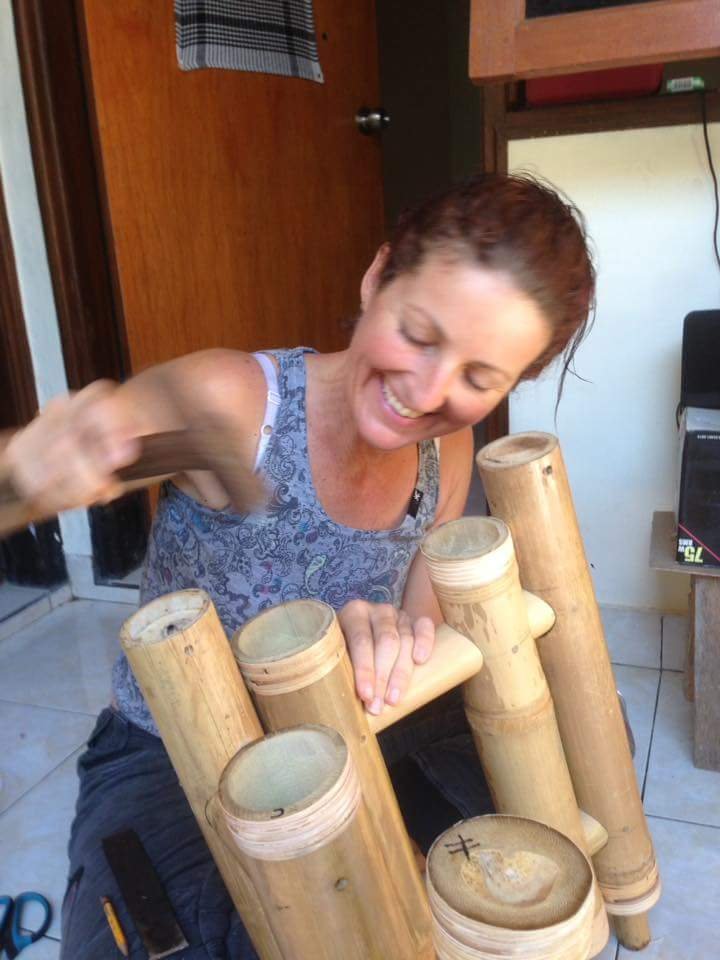
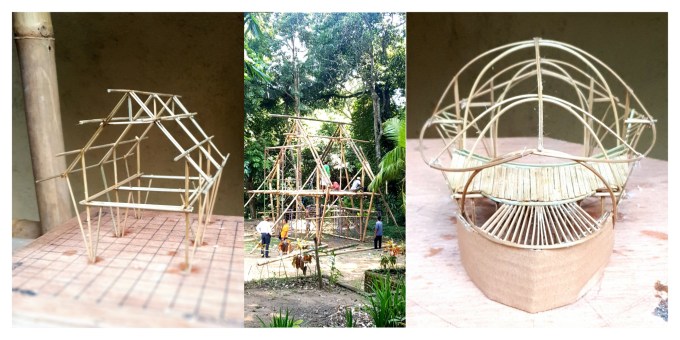
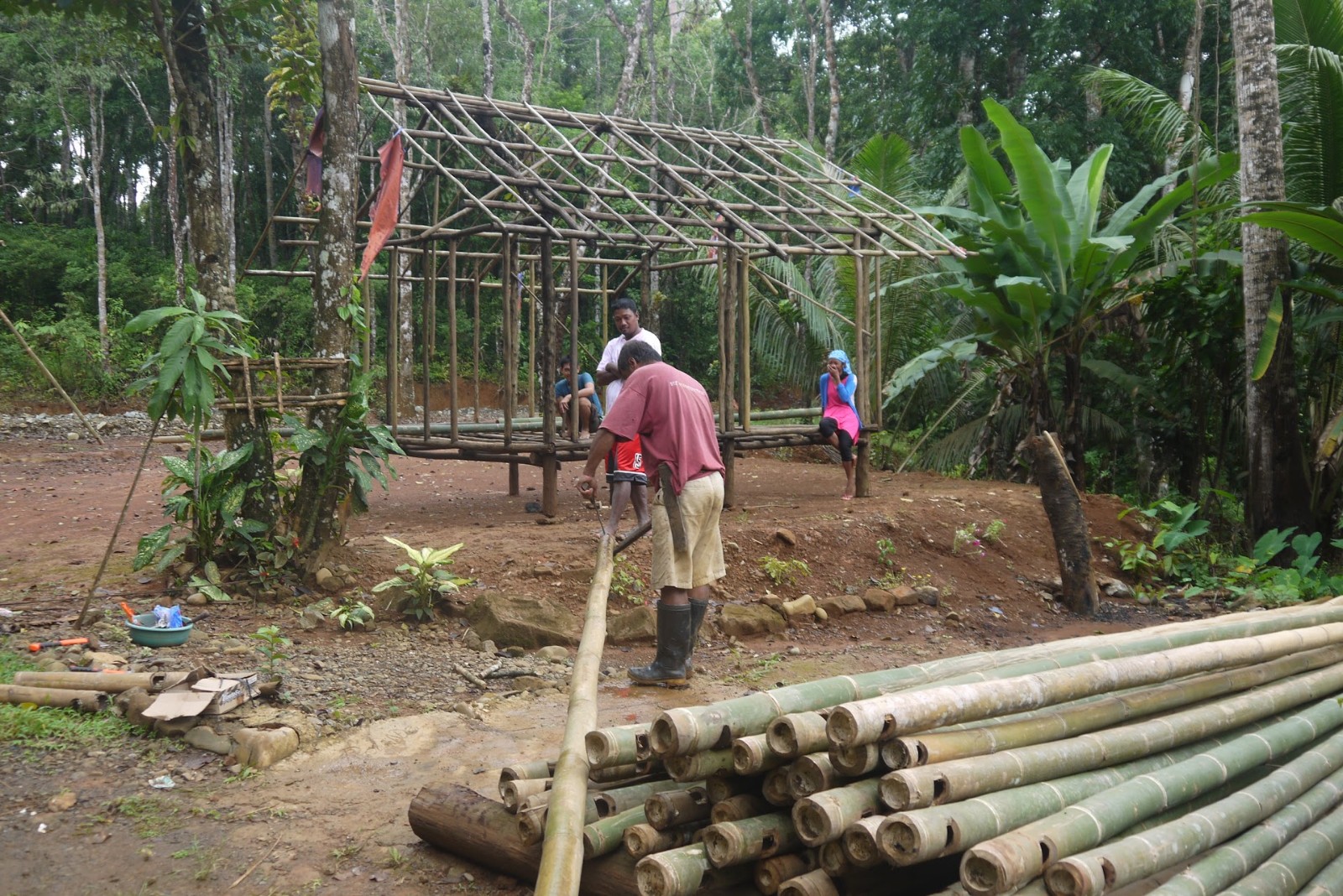
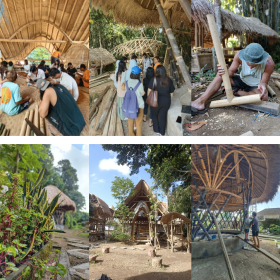
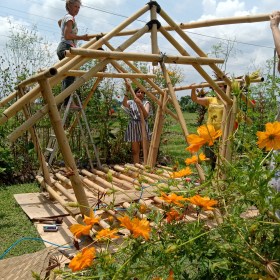
Our focus for our design and building topics are a Forest-kubu style house – or beach hut on the other hand… and we are learning through practicing all the design elements that go into bamboo building (at a manageable scale…. Maybe not a 40-50 foot building). And in our first days of carpentry we make something/things to understand the basic joineries of bamboo at a smaller scale that we can practice on/work with. The idea is that someone, somewhere, may be able to go help a bunch of other people create something… on land they still own/have custodianship of – and make something that can benefit the community as a whole, and bring more diversity and indiviuality and uniqueness and Value based on this uniqueness – rather than by fitting in/standardising and conforming/being paid shit wages (comparitively with the value generated – and don’t get me started on that one) or just by having one individual owner who benefits from an endeavour. And that’s where Regenerative Economy concepts come in…. (Stay Tuned).
Impossible? Perhaps! But it will be fun to try and what have we got to lose? Only the planet!!! (If we don’t do anything/ do nothing/ keep the status quo/ expect the solution to come from “outside”).
We can/could be utilising education programs to relearn the skills which have been stripped by western civilisaton – lulling us into a false sense of security/superiority… all the while making us more dependent… reliant. Have you seen the Movie “Cloud Atlas” – what happens to the girl when she “graduates” to the upper floor?

We can and Should be utilising education to do important work like ecosystem restoration and rehabilitation. What an environment to learn in! (Classrooms are so outdated and not really necessary i.e. you can build yourself a bamboo desk/nook and have a solar lamp and internet access pretty much Anywhere now). What is it we really need to learn from Schooling except how to become a lifelong learner and to educate ourselves (Latin root word “educare” – to bring the inside out).
Transparency.
Through creating inclusive learning environments, we can hone each individual’s gift and talents – and find ways to maximise their ability to Contribute to society as a whole. The traditional thinking topics such as law, accountancy, literacy, botany, mathematics/geometry, science – Can and dare I say Should be mobilised and adapted/become adaptive to: Real life situations and “problems”…. The Group Mind… Creativity and Innovation… Evolution! Now IS the time (we’ve been waiting for).
Bamboo can help us as a society to step through the current modern/cultural barriers towards a simpler and more fulfilling way of life.
Discover more from Bamboo Creative Bali
Subscribe to get the latest posts sent to your email.
 Bamboo Creative Bali