

Yesterday, I was at the gym when I remembered my grandfather, who lived a long life. He was one of 13 children and the second youngest, and all his older brothers died in the War. This made me realize how much sadness he must have felt throughout his life. My family never discussed feelings, so he had to soldier on. I can now see the emotional fallout and constant sense of loss he experienced. He took antidepressants to cope with life but always carried a sadness that never went away. Despite that, he once told me, “I know one day, you’ll be a judge Natalie,” which seems like an interesting thing to say to a child. It’s sad how war creates trauma, darkness, and disconnection in families and communities. As the emotional void of my childhood lifts, I pray for those currently facing trauma, hoping they can find peace and joy in this lifetime.
It is not the everyday people, but the governments and corporations of the world that have and are causing the perpetuation of war, starvation and suffering… Because of their selfish morals (or lack thereof) and stealing resources and land. War is profitable and that’s the bottom line – as long as war remains profitable — governments will keep being driven by Arms companies to kill humans and life on Earth. Just follow the money.
I’m recalling how corporations obtained legal personhood, changing from serving humans as initially intended to being recognized as legal entities for their own purposes. This transformation came about when a law originally meant to give Indigenous American Indian people voting rights was used to distinguish corporations from previous categorizations that denied Indigenous people recognition as individuals.
Why should governments, which are meant to serve and protect the interests of their people, also be enabled by their citizens to destroy the lives of others on this planet? It is crucial for individuals to hold their governments accountable and demand transparency and ethical decision-making. When citizens are actively involved in the governance process, they can help ensure that policies and actions prioritize human rights, environmental protection, and global well-being. By fostering an engaged and informed citizenry, governments can be held to higher standards, promoting a more just and sustainable world for all.
We are in a critical time of reflection as AI becomes more present in our lives. I wonder about how AI is taught to react and who oversees its behavior. Is there a global body representing humanity’s interests? What safeguards exist against profit-driven agendas? Who governs AI’s conduct, as well as the corporations and governments developing and manipulating it? Is there a safety mechanism or authority to address these concerns? Moreover, who holds individuals like Bill Gates accountable for climate experiments with potentially far-reaching effects? What about the liability and cleanup for any adverse impacts? On the positive side, who decides recognition and awards for beneficial technologies and high-performing AI? These questions extend beyond AI and apply to various issues that have come to light, revealing the concerning influence of private companies and governments on global affairs.
There is a prevalent concern about the interdependence between government and private entities, which often prioritizes corporate interests over the welfare of the governed population. This symbiotic relationship, sometimes described as a “revolving door,” raises apprehensions about the alignment of governmental decisions with the agenda of corporations. This concern has led to a growing debate about the influence of lobbyists and industry insiders on policy-making processes, as well as the potential impact of regulatory capture on the enforcement of laws and regulations. Furthermore, the blurred lines between public service and corporate interests have sparked discussions about the ethical responsibilities of public officials and the transparency of decision-making processes. Addressing these complex dynamics requires a comprehensive examination of the regulatory framework and the development of measures to ensure accountability and the protection of public interests.
The mention of investors in arms companies as influential players in global dynamics highlights the association between warfare and economic gain. This connection raises concerns about the impact of financial interests on international conflicts and the potential for prolonging or escalating armed confrontations for the sake of profit. It underscores the need for stringent regulations and ethical considerations in the business dealings of such companies, as well as the importance of transparency in their relationships with governments and military entities. Additionally, the call for the immediate prohibition of all military applications of AI underscores the urgency of addressing the ethical and moral implications of emerging technologies in the context of armed conflicts. The introduction of the Alliance of EARTH LORE as a protective mechanism for life on Earth represents a significant step towards establishing a unified and ethical framework for the development and deployment of AI technologies. This collective initiative seeks to promote responsible AI usage and advocate for the prioritization of human well-being and environmental sustainability in AI development and deployment. By fostering global collaboration and knowledge-sharing, the Alliance aims to address the societal, environmental, and geopolitical impacts of AI training, which have become a subject of intense political scrutiny and public concern.
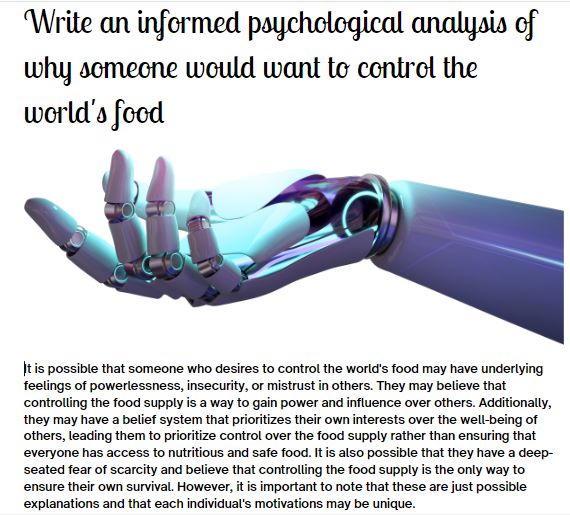
(Couldn’t help myself)
I feel small and insignificant in the bigger picture of how the world operates. I pray for Real Leaders to rise up and implement laws and jurisdiction representing our Earth and all its peoples. I believe we can all make a difference and must trust and have faith to let go of the system that is holding people in unnatural segregation. It is essential for us to actively engage with our communities, advocate for change, and support initiatives aimed at creating a more inclusive and just society. By educating ourselves and others, and actively participating in movements for social justice, we can contribute to shaping a world that values equality and respects the rights of every individual. We must strive to foster a sense of unity and understanding, transcending the barriers that divide us, and work towards a future where all voices are heard and all people are valued.
Discover more from Bamboo Creative Bali
Subscribe to get the latest posts sent to your email.






 Bamboo Creative Bali
Leave a comment